Thursday, 22 February 2018
Transpotting: choose life
Choose Life is an aphorism used in the film Trainspotting by it's flawed male lead Mark Renton, who is presented as a questionable character in terms of morality. Contextually 'Choose Life' was a famous slogan for an anti-drug campaign during the late 80's but I believe Renton chooses to make a mockery of this slogan and suggests in my opinion that 'Choose Life' means to choose whichever path that makes you feel alive. Life within the film is presented as a desire for more, be it more drugs, more money or more friends each of the character's is shown to have a strong desire for something which they define as their lives.
Renton is a character both struggling with his own heroin addiction and the pressures of the negative influences around him, these are presented in the form of his friends and his drug abuse. As the narrator of the story he is most suitable as not only is it his story, being such a morally ambiguous character he has no bias towards his actions as he displays his tale to the audience without sugar coating any of his decisions which as the narrator he technically would have been able to do if he'd wished. Audiences are able to identify with Renton as he represents much of the corrupted nature that is human and allows the audience to reflect upon themselves and their own ethically questionable behaviours. This is highlighted right as the end of the film through the line 'I am going to be just like you." Suggesting to the audience that they should be able to see Renton within themselves. Renton himself is a fairly reliable narrator refusing to lighten the weight of his actions he describes the events throughout the film at a level of detail that can only be described as self-depreciating as if the film is his visual confession, an atonement of sorts.

Weekly film analysis: Black Panther

Black Panther is a science fiction (superhero) action movie directed by Ryan Coogler and marks the third collaboration between him and Micheal B Jordan, (Erik Killmonger) the pivotal anti-villain inside the feature length flick. It started with a budget of 200 million and although it's still in cinemas has already raked in 426 million worldwide so far but is expected to pass 600 million due to the successful nature of the film and it marks the improvement of the director as it is a complete change for the superhero genre, as before the film's release there had never been a black director used for a marvel film or a predominantly black main cast in a feature length film that wasn't based of slavery, crime, drugs or poverty. Making it a milestone not just in black history but in human history.
The first of Coogler's films is Fruitvale Station (released in 2013) which biographical drama which revolved around an African American male trying to live an honest life for his family in a world full of temptations who is unlawfully killed by a police officer. It is based in Coogler's hometown of Oakland had a budget of 900,000 USD, earned 17.4 million at Box Office and proved itself to be a hit at the Sundance festival and Cannes, the film has won 8 awards and is highly rated among critics (94% Rotten Tomatoes) to be a very good film however due it's release occurring 5 months before the typical Oscar contenders do, and its status as an independent film found it snubbed from the top award shows such as the Oscars and the Golden Globes however it did allow Coogler to establish himself as a credible director and B Jordan to further promote himself as an actor.
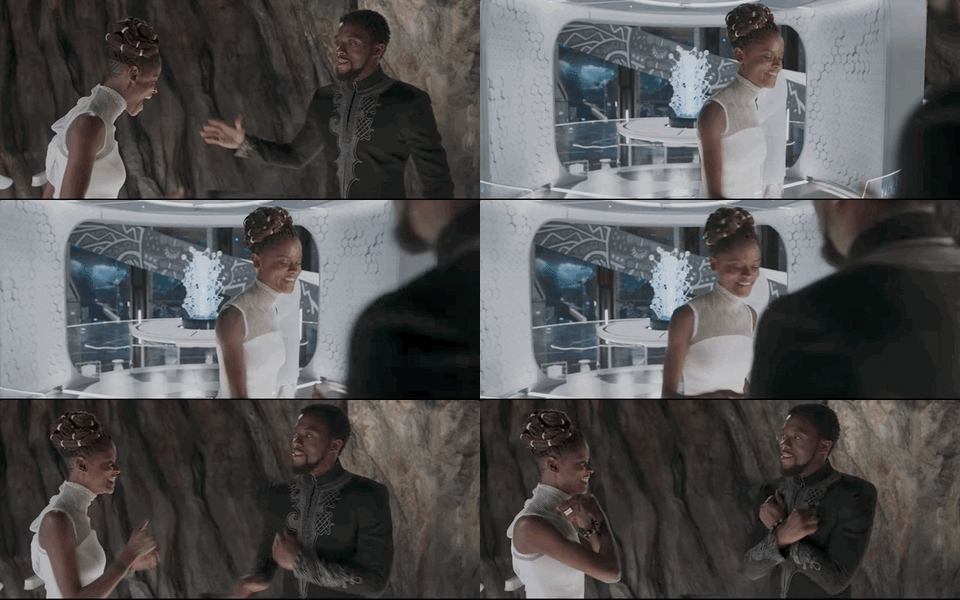
Coogler's next feature 'Creed' a sports drama released in 2015 details the continuation of the 'Rocky' series, placing Sylvester Stallone's titular character in the role of mentor and re-casting Micheal B Jordan in the place of the boxer. This film again was a critical success (95% Rotten Tomatoes) with a budget of 40 million, significantly larger than the budget of his previous film due to it's success, and made 173.6 million at box office. Yet despite this clear improvement the film was still snubbed at the oscars earning only one nomination (Sylvester Stallone-supporting character) that despite reboots being notoriously worse was able to reinvent the franchise in was that was not appreciated as he received no directer nod for Coogler or best actor nod for Micheal B Jordan.

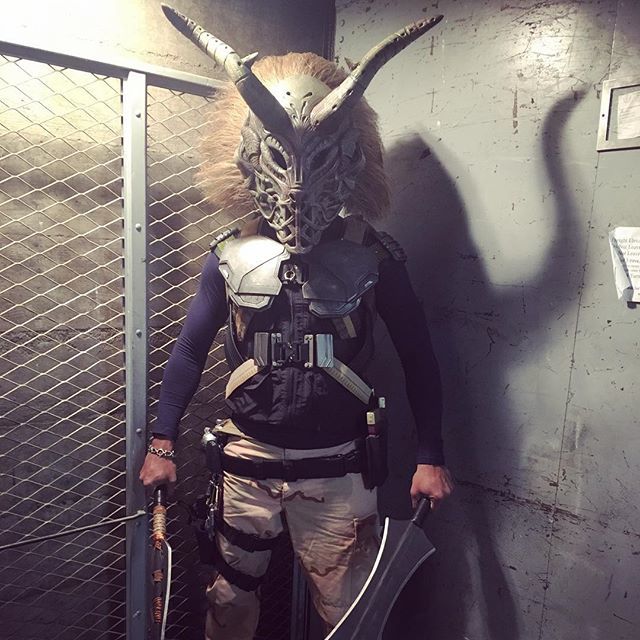
Black Panther takes a fictional country in Africa (Wakanda) as it's base location while using contextual parts of Africa and African culture as it's elements inside the film. From it's language with Wakandan people speak Xhosa a language spoken by 7.6 million people in South Africa, the costume is also deprived from African culture, from the costumes the characters wear an example being Killmonger's mask displayed early on in the film which is from the Igbo tribe in Nigeria and was used during the local ritual and is known 'Mgbedike' which roughly translates to 'time of the brave' as Bravery is one of the key themes of the film. Other costume inspirations include Queen Mother Ramonda sporting a zulu headdress which is traditionally worn by married women.

Black Panther is takes a fictional country in Africa
(Wakanda) as its base location while using contextual parts of Africa and
African culture as it's elements inside the film. Wakanda is displayed as an
exceedingly technologically advanced country hidden from the rest of the world
due to the valuable nature of their resources but as a front is presented as a
poor African country of farmers, this intended as a subtle humour device as
ignorant people believe that Africa is purely just poverty when in fact it
really is not. The film shows this by drenching itself in rich African culture,
currently Google and Facebook have 314 active tech hubs in 93 cities across
Africa. from its language with Wakandan people speak Xhosa a language spoken by
7.6 million people in South Africa, the costume is also deprived from African
culture, from the costumes the characters wear an example being Killmonger's
mask displayed early on in the film which is from the Igbo tribe in Nigeria and
was used during the local ritual and is known 'Mgbedike' which roughly
translates to 'time of the brave' as Bravery is one of the key themes of the
film. Other costume inspirations include Queen Mother Ramonda (Angela Bassett)
sporting a zulu headdress which is traditionally worn by married women. African
culture has never been displayed so proudly before cinematically so many people
of colour brought it upon themselves to represent formal African regalia from
various diverse African countries that they are either from or feel connection
to.
Coogler chooses to use his characters to represent and accentuate the double consciousness held within the film mainly through T’challa (Chadwick Boseman) and Erik Killmonger (Micheal B Jordan) which are presented as the main hero and villain in the film. When we first see T’challa it is obvious he is intended to be the good character as he arrives on screen to save the female character, the day before his coronation to secure his place as king. When we first see Killmonger he is assisting Ulysses Klaw (Andy Serkis) who is initially presented as the main villain but is betrayed by Killmonger for reasons that relate to his backstory. This is when the character really begins to flesh out, Coogler chooses this moment within the film to explain his back story which details the character’s clear obsession with Wakanda and the reasons behind it as although his father was born in Wakanda as a price nonetheless he feels somewhat separated due to his place on birth not being there despite everyone originally coming from Africa and . Contextually many African Americans within America feel lost due their roots to their African heritage lost after the events of the slave trade and abandoned by the current America due to Donald Trump’s presidency and the rise of Trumpism.

Black Panther works as a counter to this through its role as a superhero movie and the influence that provides Coogler deliberately creates a film in order to inspire, almost a reminder of the Obama era which is known as a happier time in America which promoted hope instead of hate. Coolger shows the absence of hope through Killmonger, a character who should be the hero of the story but is the villain made by the abandonment of Wakanda in Oakland, California (homeplace of Coogler and the Black Panther Party.) Killmonger appears to want the liberation of black people worldwide who were affected by slavery but in reality he is simply striving for revenge, and it’s easy for the audience to emphasize as his idealism is relatable but like many he goes about it in the wrong way similar to the Black Panther Party and a representation of the part in its later years as it turned to bloodshed. This is made worse by the inclusion of the the American Military system, which Coogler highlights to again be corrupted as quoted by Killmonger lead to him kill his own brothers and sisters on the continent of Africa in the form of various civil wars, this is further emphasised by the scars of each kill that stain his body and Agent Everett Ross (one of the only two main white cast) who refers to Killmonger as ' not Wakandan, he's one of ours' which is an explanation of his training by the US government to kill, showing that the part of him that made him evil cannot be his African side as the US taught him to kill. While T'challa is presented as a he only actually becomes one after meeting Killmonger and learning that although he must be stopped he's not wrong, and he learns from this, instead of becoming his enemy he overcomes him by not only being better than him but beating him a better way. The film also manages with ease to be pro women without degrading men in the process by promoting an all female army and placing the female characters in the same level of importance as males are normally portrayed in films by allowing them fight freely against males in combat similar to Wonder Woman's opening battle scene as they should be able to, women are also killed multiple times within the film which is wonderful to see as many films are hesitant to show violence towards women in battle scenarios which socially insinuates that women have no place on the battlefield.
The film's soundtrack is headed by 12 time Grammy winning Kendrick Lamar, Sza, Trippie Redd, The Weeknd, Future, Schoolboy Q and other black artists predominantly from the West Coast of America, the home of the Black Panther Party. It has already hit number one on the billboard 100 list and stayed there for several weeks.
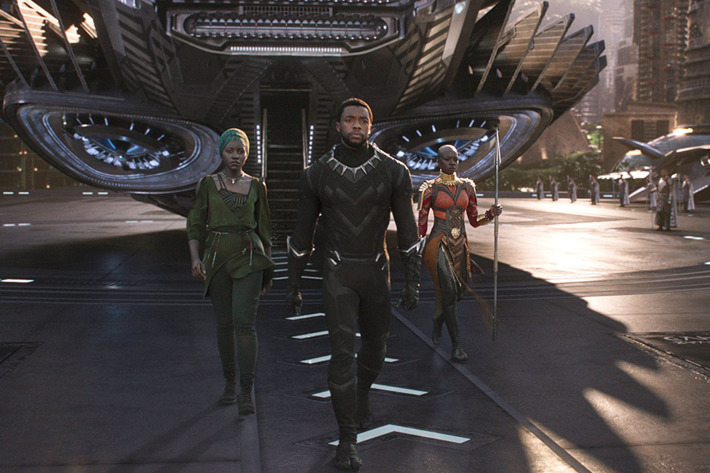
In conclusion Black Panther's multiple endings is intended to be the film's last message of hope with the creation of the Wakanda outreach program, which is done to end Wakanda's chosen isolation from the rest of the world and teach the young about all it can do as a country. This is led by T'challa's sister teenage genius Shuri (Letitia Wright) as he places her in the position of teaching them about Wakanda by leaving her and his spaceship in Oakland in order for her to inspire the children in that area that are in most need of help. Meanwhile he visits the UN and reveals Wakanda, offering to share their resources. A tone Coogler suggests many world leaders should take, to place importance on all the people of the world not just the ones within their countries.
‘Who’s more moved emotionally, that kid or the people sitting in the U.N.?’ Who is that a bigger deal to for T’Challa to walk in, who’s more connected to him?” - Ryan Coogler
Tuesday, 6 February 2018
Weekly Film Analysis - Grown Ups
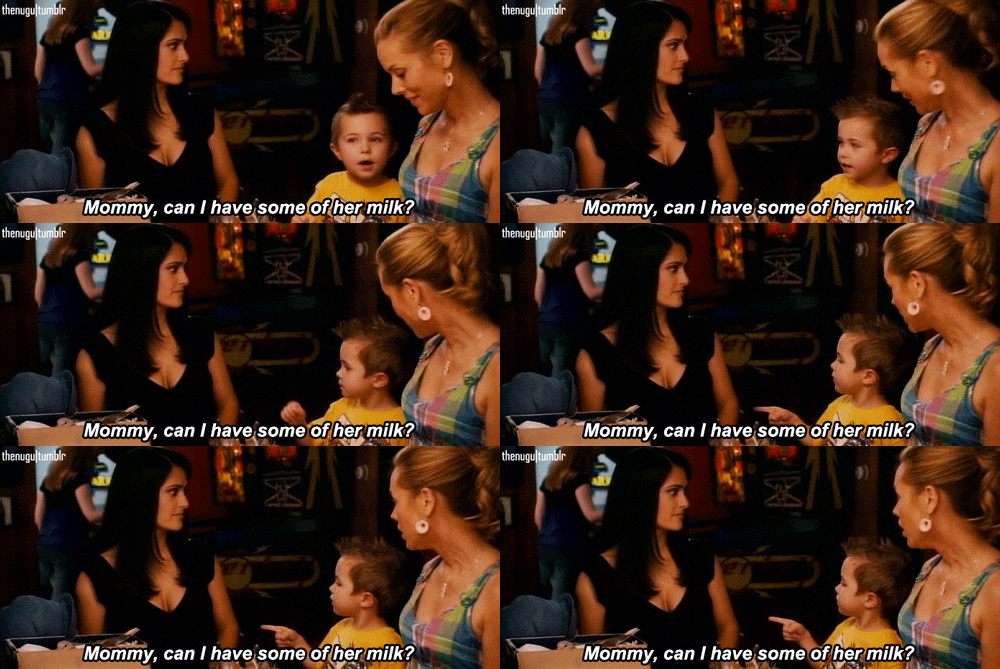
Grown Ups is a summer June 2010 buddy/comedy film. shot in the USA intended and marketed
towards families that details the story of a man and his family who meets up with his childhood friends
and their new families at their basketball coach's funeral and gather to celebrate the anniversary of
their championship game. Grown Ups explains adult life as one that provides certain responsibilities
but still opens room for enjoyment; this is expressed mainly through the films cast. The film is directed
by Dennis Dugan, famous for directing a number of Adam Sandler starring films (Just Go With It,
You Don't Mess With The Zohan, Happy Gilmore, Big Daddy) and this film their fifth collaboration, a
great of the main cast members of the film are also all former SNL (Saturday Night Live) cast members,
these include Adam Sandler, Chris Rock, David Spade, Rob Schneider (1990–1991) as well as Maya
Rudolph. The film was produced by Adam Sandler’s production company Happy Madison, which the name
a mashup of his two most successful films Happy Gilmore and Billy Madison, the company is best known
for its comedy films as is Adam Sandler yet he is also known for his comedic flops as his feel-good films
can take an offensive or purely unfunny tone as they did with Jack & Jill.

Grown ups tries to place adults/parents in a relatable fashion, showing that yes they make mistakes,
have their personal struggles and responsibilities, they still are childish are heart in certain situations
are that they use these to connect and teach their children by finding common interests such as what they
enjoyed as children and hoping to pass their memories onto them as well as rebuiliding their own strained
relationships. The film does this through comparing different incomes of the different families, as well as
ethnitiies and job positions in order to show that although they have seperated and have different lives
they are able to find common ground and with help from each other can teach them and their children to
grow, this is done to make the film relatable, as many Sandler films are, audiences are given clear
oppourtunity to place themselves in the shoes of the characters which collectively represent different
types of families.

For example, the main character Lenny (Sandler) is presented as the wealthiest member of the group due to his profession as a high powered talent agent while his wife is a famous fashion designer, his three children are presented as spoilt due to their parents well paying jobs, this is used as a source of humor in the film, comedy films are intended to make the viewer laugh, as Lenny constantly attemps to make his children see that there is more to life than money and technology, audiences can engage with this idea as contextually even in poorer families most children are fairly obsessed with their technological devices and most would rather stay inside and socially exclude themselves from those not usuing thewm which can caused strained family ralationships and social problems. The film also puts a high focus on moral message a great deal of the film is learning about having humility and the viewers can see the characters struggle with this through how they interact with poorer characters (Kevin Smith's character lying about his job) in an effort to impress thier friends and those around them. Which relates to the 'American Dream' of making as much money as possible in an effort to better yourself when in relatity just encourages greed.

In terms of sound Grown's Ups has a theme song in the form of Escape (The Pina Colada Song) by Rupert Holmes which perfectly describes and fits the feel good nature of the film, with hawaiian holiday vibes and it's theme of escapism it reflects the tone of many Adam Sandler films as they provide an idealistic view on familiy life and the need to sometimes experience something for pleasure and not for technical useful purposes. It also carries a nostaligic type of sound through its soundtrack, accentuating the theme of rememberence which is aso prevalent in the film as thew come together to remember their basketball chocach who brought them together as friends and has once again united them through his death.

Critically Adam Sandler films don’t tend to do well as shown by it recieving a 10% rating on the
tomatometer on Rotten Tomatoes, but it is seen that many people enjoyed the film not for critical
or technical reasons as it’s not technically a great film, yet it was shown to me a massive box office
success, grossing $271 million worldwide which could be interpreted as film intended to just do well
commercially and a quick cash grab for Sandler and his co-stars who he purchased Maserati’s for after the
success of the film. However in order for a comedy film to do well there needs to be humor and the film
itself is genuinely funny just very family-centered humor which doesn’t make it a bad film, it doesn’t make it
an extraordinary film but in my opinion it’s unique and special in its own right as the film carries a certain
vibe that can only be found in films with this type of laidback, sometimes cute, sometimes dark and
sometimes obvious levels of humor.
These films are exclusive to Adam Sandler being cast as the main character as his films have a certain
enjoyable tone when done right.
Audiences polled by CinemaScore gave the film an average grade of "B" on an A+ to F scale which shows
that a film doesn't have to be critically acclaimed in order to be successful.
"Grown Ups' cast of comedy vets is amiable, but they're let down by flat direction and the scattershot,
lowbrow humor of a stunted script." Rotten Tomatoes, critical consensus
Tuesday, 23 January 2018
Scene Breakdown Suggestion
40 Year Old Virgin
Script Link
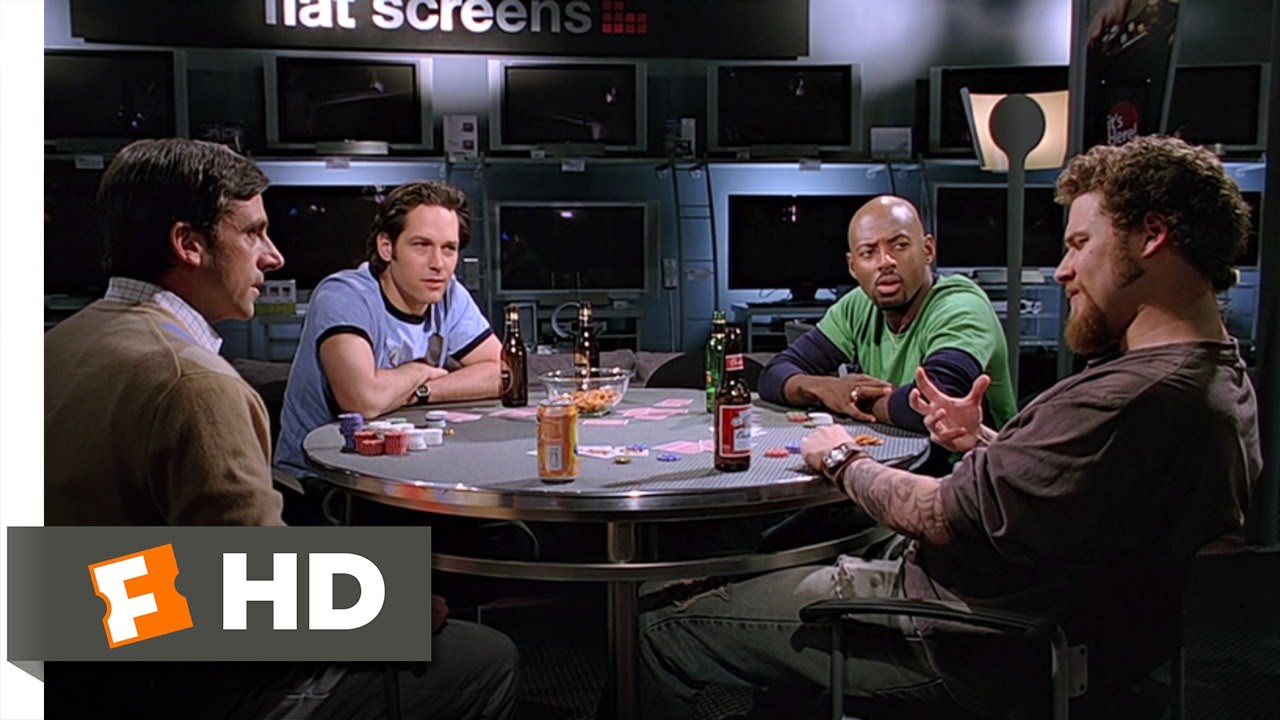
I would like to suggest the Poker Scene from the film '40 Year Old Virgin' for our class' reenactment lesson for several reasons. The first in which being that it is comedic which makes it more enjoyable to perform as well due to it's amusing nature. It's also a widely popular film which I believe many people my age would have watched and already know so will able to to deliver the lines and perform the scene similar to it's original.
When performed I think that our class should put a twist on the scene and deliver the lines exactly as stated but change the premise of the scene from a Poker Table to something more relatable to people our age, like talking together at lunch for example for after the teacher has left the classroom as it shows that we are able to take an example and form it into a more relevant situation to show our understanding of the film.
I also think that when we shoot that we should place the camera at an angle that makes it look as if it is the metaphorical 'fifth person' on the poker/lunch/classroom table and then use four separate other cameras to do portrait shots of the four actors as they say they lines
I also think that when we shoot that we should place the camera at an angle that makes it look as if it is the metaphorical 'fifth person' on the poker/lunch/classroom table and then use four separate other cameras to do portrait shots of the four actors as they say they lines
Wednesday, 17 January 2018
Weekly Film Analysis - Hidden Figures
Hidden Figures is a biographical drama with heavy comedic features throughout its duration. It is directed by Theodore Melfi and supported by a majority black female cast which is explained by its themes of racism, segregation and gender equality and that contextually all three main women within the film would have faced all of this throughout the Jim Crow era 1960’s as shown through a comedic sequence in which the main female character Katherine Johnson is made to run from one building to another just to use the toilet which is made out to be humorous at multiple times throughout the film's run until she is caught late by her boss and she is forced to express her predicament through the form of a speech. This is edited in such a way that accentuates to the audience that this system is not only inconvenient but unethical, which mirrors the attitudes of many Black-Americans of the time and now.


The film's mostly set within the NASA space station and the separate department which is their coloured department, by modern day standards this is complete racism but in 1960’s standard segregation was the norm but this film tries to show how although that as black women they are perhaps in the most difficult position they manage to push through that and achieve something great despite lack of belief. The film itself sets out to inspire with this message as it is bases heavily off a true story the actions the characters take throughout the film are real to a certain extent so it makes it easier for the audience to empathise and believe what the film is trying to sell through its realism.

In terms of camera quality it's shot in 4k and is made grainy is certain parts of the film to give a vintage effect and remind the audience that this is still set in the 1960's era and it uses a lot of images of rockets blasting off from real NASA missions to add drama to the tone of the film through the sound as well as remind older audiences of footage they may have seen growing up and create a nostalgic feel.
Critically the film did exceeding well with critics describing it as: Hidden Figures is the rare true story-based historical drama that succeeds at being as inspirational and feel-good as it aspires to be.
Sandy Schaefer
Screen Rant
⅘
Sandy Schaefer
Screen Rant
⅘
It received a 93% rating on rotten tomatoes at was well received due to its heartwarming message.
Thursday, 11 January 2018
Winter's Bone and Captain Fantastic Analysis
Winter's Bone and Captain Fantastic are both films that share the theme of family, able to portray how each is exceptionally different and how they all share their own individual struggles, this is not their only similarity as they both are alike in setting with both films having a connection to nature and the forest through the locations of their characters.
WB has a sort of rustic feel to the film as it explores parts of America that are not normally known as prominent locations in film and shows the grittier side of the country in a indie genre stylised manner, opposing towards Captain Fantastic's comedic drama; Captain Fantastic is able to provide warmth with it's humor in a way that WB can't, although WB does have occasional moment that could be thought of as humorous it is on the darker side of the spectrum and isn't particularly obvious like many parts of Winter's Bone it has a theme of secrecy with the setting of tall trees and peering neighbours seemingly shrouded with mystery.
Critically both films did exceptionally well, with Captain Fantastic receiving a 83% on the Rotten Tomatoes tomatometer and audiences describing it as "An irresistible and intelligent film that understands the fascinating complexity of its main character, his questionable actions and the way he believes to be the best to raise his children - which inspires our sympathy." as did Winter's Bone which actually did better receiving a 94% "Bleak and disenchanting look at the dark side of the American countryside. Carried by great acting performances and the fascinatingly gloomy criminal networks of Ozark County."
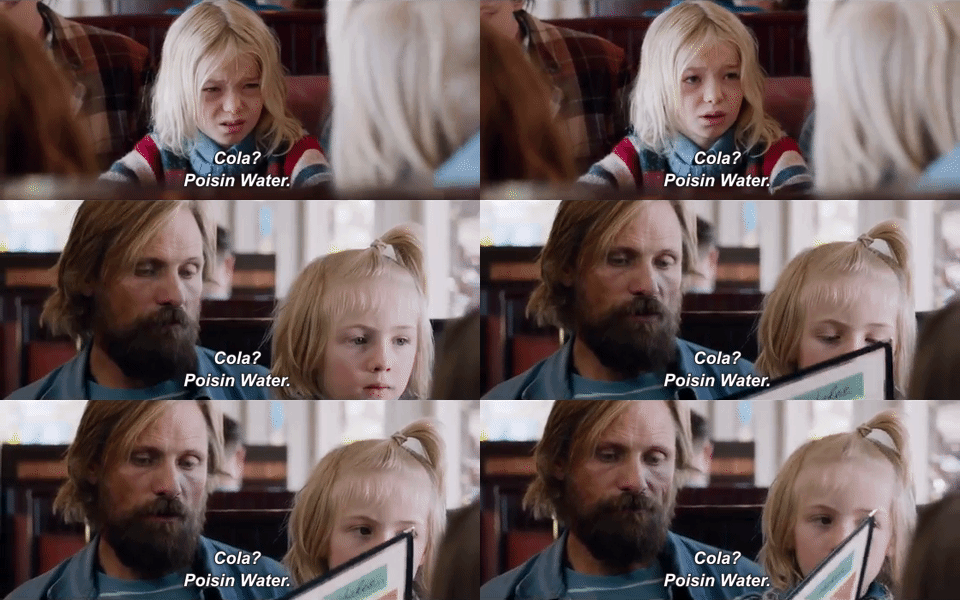
While WB aims to shock and slightly disgust, this is shows rather explicitly through the scene in which the main character is forced to sever a limb of a man who potentially may be her father; In contrast to this Captain Fantastic aims to invoke your interest and force you to question the way you think, it does this also through the presentation of its main character and how he chooses to raise his fam9ily by unconventional means that in today's society are regarded as 'abuse' yet his children seem much more capable than others in their age bracket, it opens up questions on what lessons are actually best to pass onto children and which lessons children should be allowed to learn themselves. This is perhaps done to challenge the social construct that being in a school environment is the best and only way to learn as shown in the scene in which the main character's seven year old daughter is pitted against her older cousin in a challenge of intelligence, both are asked the same question (what is the American Bill of Rights) and while the cousin, who is meant to represent the average american child, is unable to answer the daughter is able to eloquently answer to the degree of someone who'd studied law.
Both films also examine the importance of parental presence, as WB's present one parental figure as psychologically absent and the other as potentially dead criminal it is imminently clear that within their family the teenage main character (Ree Dolly) is the parental figure, taking on the responsibilities of looking after her two younger siblings and their home. This is done like Captain Fantastic in a way that reflects our current society and allows audiences to question their presence in their homes within their on families and how it is affected by their absence of lack thereof. WB explains that familial ties have the ability to hold you back as much as they have the ability to propel you forward, depending on how close your family is. During the film the main character goes on a journey and asks anyone regarded as family for help yet they choose to turn against her in a bid to save themselves, showing there is more to family than blood as it depends on what you can actually do for your family.
Spike Lee's Do the Right Thing compared to Chi-Raq and The Best Man
'Do the Right Thing' and Chi-Raq' are both films made by director Spike Lee, both contain similar themes of race and poverty but their messages are quite different as while DTRT has a strong focus on racism and class; CR places it's importance on an attempt at feminism but fails to understand the true meaning of it, taking on a more generic stereotyped approach rather than DTRT which takes the stereotypes and shows how we incorporate them ourselves in our own lives.
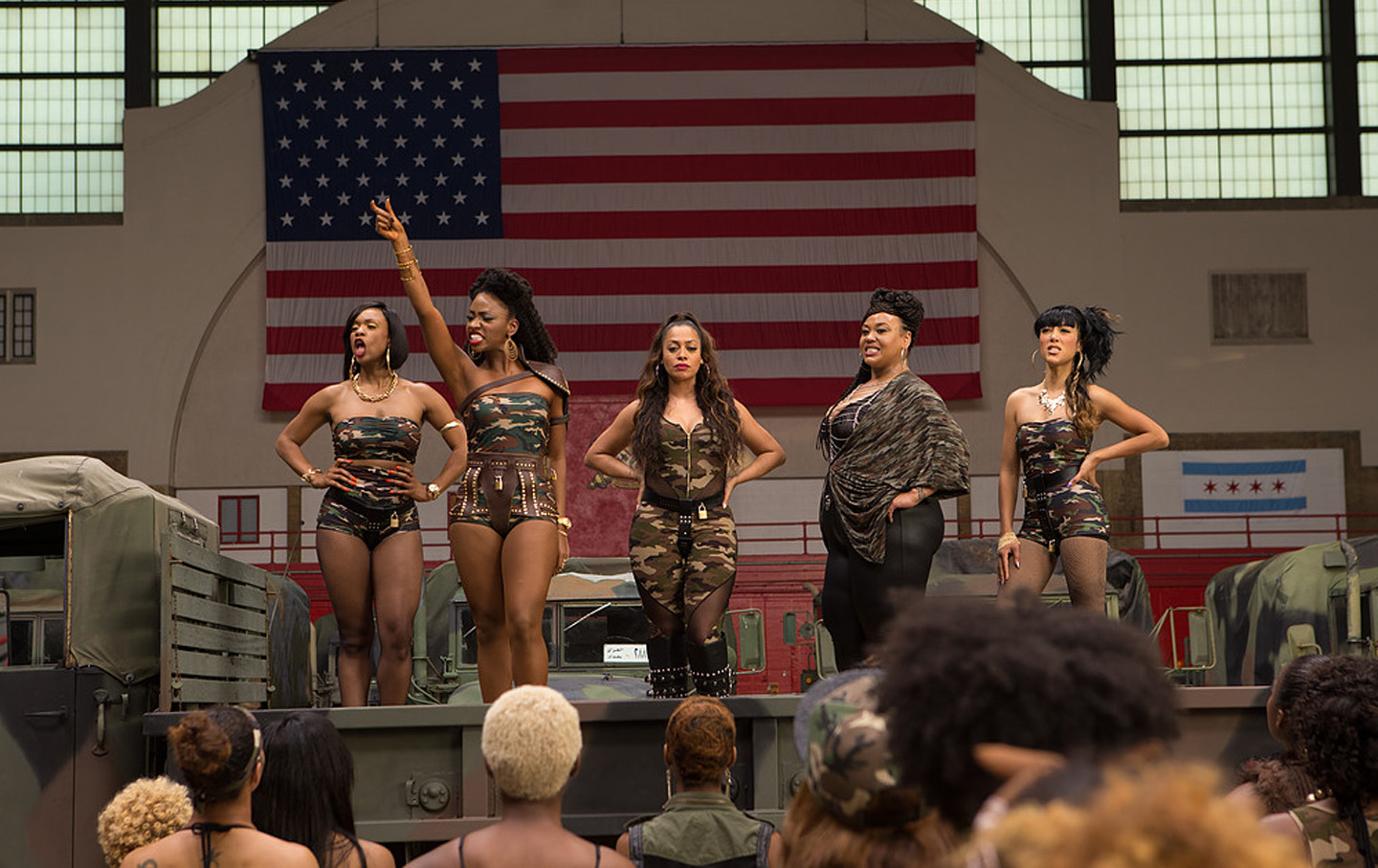
As a film CR is not entirely without fault as visually it is stunning, similar to DTRT which can be exceptionally brightly coloured at many times throughout it's run, as well. Yet CR has a much lighter tone despite the dark situation behind the comedy in which the crime rate in Chicago has reached levels where it is comically referred to as 'Chi-Raq' a conjunction of the state of Chicago and the country of Iraq - a war torn country in the middle east. The title itself dictates the situation
As a film CR is not entirely without fault as visually it is stunning, similar to DTRT which can be exceptionally brightly coloured at many times throughout it's run, as well. Yet CR has a much lighter tone despite the dark situation behind the comedy in which the crime rate in Chicago has reached levels where it is comically referred to as 'Chi-Raq' a conjunction of the state of Chicago and the country of Iraq - a war torn country in the middle east. The title itself dictates the situation
Subscribe to:
Posts (Atom)