Tuesday, 23 January 2018

Scene Breakdown Suggestion

40 Year Old Virgin


Script Link 


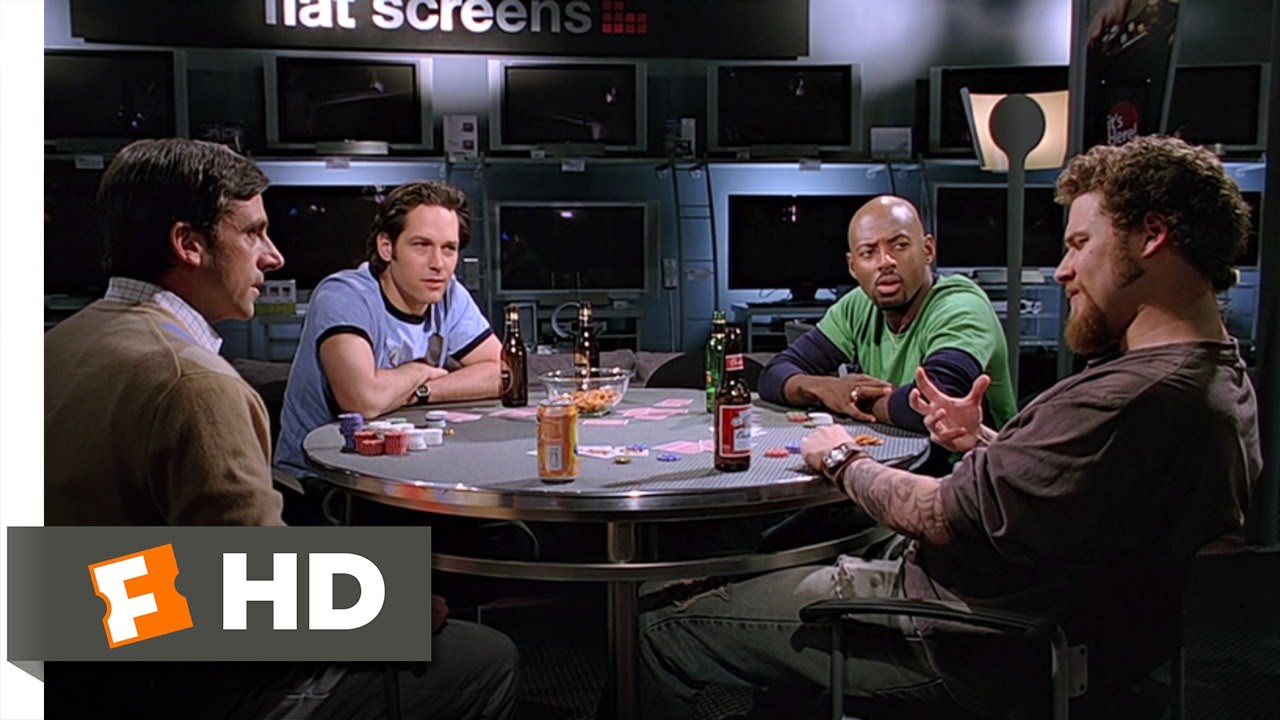
I would like to suggest the Poker Scene from the film '40 Year Old Virgin' for our class' reenactment lesson for several reasons. The first in which being that it is comedic which makes it more enjoyable to perform as well due to it's amusing nature. It's also a widely popular film which I believe many people my age would have watched and already know so will able to to deliver the lines and perform the scene similar to it's original.

When performed I think that our class should put a twist on the scene and deliver the lines exactly as stated but change the premise of the scene from a Poker Table to something more relatable to people our age, like talking together at lunch for example for after the teacher has left the classroom as it shows that we are able to take an example and form it into a more relevant situation to show our understanding of the film.

I also think that when we shoot that we should place the camera at an angle that makes it look as if it is the metaphorical 'fifth person' on the poker/lunch/classroom table and then use four separate other cameras to do portrait shots of the four actors as they say they lines

Wednesday, 17 January 2018

Weekly Film Analysis - Hidden Figures


Hidden Figures is a biographical drama with heavy comedic features throughout its duration. It is directed by Theodore Melfi and supported by a majority black female cast which is explained by its themes of racism, segregation and gender equality and that contextually all three main women within the film would have faced all of this throughout the Jim Crow era 1960’s as shown through a comedic sequence in which the main female character Katherine Johnson is made to run from one building to another just to use the toilet which is made out to be humorous at multiple times throughout the film's run until she is caught late by her boss and she is forced to express her predicament through the form of a speech. This is edited in such a way that accentuates to the audience that this system is not only inconvenient but unethical, which mirrors the attitudes of many Black-Americans of the time and now.


The film's mostly set within the NASA space station and the separate department which is their coloured department, by modern day standards this is complete racism but in 1960’s standard segregation was the norm but this film tries to show how although that as black women they are perhaps in the most difficult position they manage to push through that and achieve something great despite lack of belief. The film itself sets out to inspire with this message as it is bases heavily off a true story the actions the characters take throughout the film are real to a certain extent so it makes it easier for the audience to empathise and believe what the film is trying to sell through its realism.


In terms of camera quality it's shot in 4k and is made grainy is certain parts of the film to give a vintage effect and remind the audience that this is still set in the 1960's era and it uses a lot of images of rockets blasting off from real NASA missions to add drama to the tone of the film through the sound as well as remind older audiences of footage they may have seen growing up and create a nostalgic feel.


Critically the film did exceeding well with critics describing it as: Hidden Figures is the rare true story-based historical drama that succeeds at being as inspirational and feel-good as it aspires to be.
Sandy Schaefer
Screen Rant

It received a 93% rating on rotten tomatoes at was well received due to its heartwarming message.

Thursday, 11 January 2018

Winter's Bone and Captain Fantastic Analysis


Winter's Bone and Captain Fantastic are both films that share the theme of family, able to portray how each is exceptionally different and how they all share their own individual struggles, this is not their only similarity as they both are alike in setting with both films having a connection to nature and the forest through the locations of their characters.

WB has a sort of rustic feel to the film as it explores parts of America that are not normally known as prominent locations in film and shows the grittier side of the country in a indie genre stylised manner, opposing towards Captain Fantastic's comedic drama; Captain Fantastic is able to provide warmth with it's humor in a way that WB can't, although WB does have occasional moment that could be thought of as humorous it is on the darker side of the spectrum and isn't particularly obvious like many parts of Winter's Bone it has a theme of secrecy with the setting of tall trees and peering neighbours seemingly shrouded with mystery.

Critically both films did exceptionally well, with Captain Fantastic receiving a 83% on the Rotten Tomatoes tomatometer and audiences describing it as "An irresistible and intelligent film that understands the fascinating complexity of its main character, his questionable actions and the way he believes to be the best to raise his children - which inspires our sympathy." as did Winter's Bone which actually did better receiving a 94% "Bleak and disenchanting look at the dark side of the American countryside. Carried by great acting performances and the fascinatingly gloomy criminal networks of Ozark County."
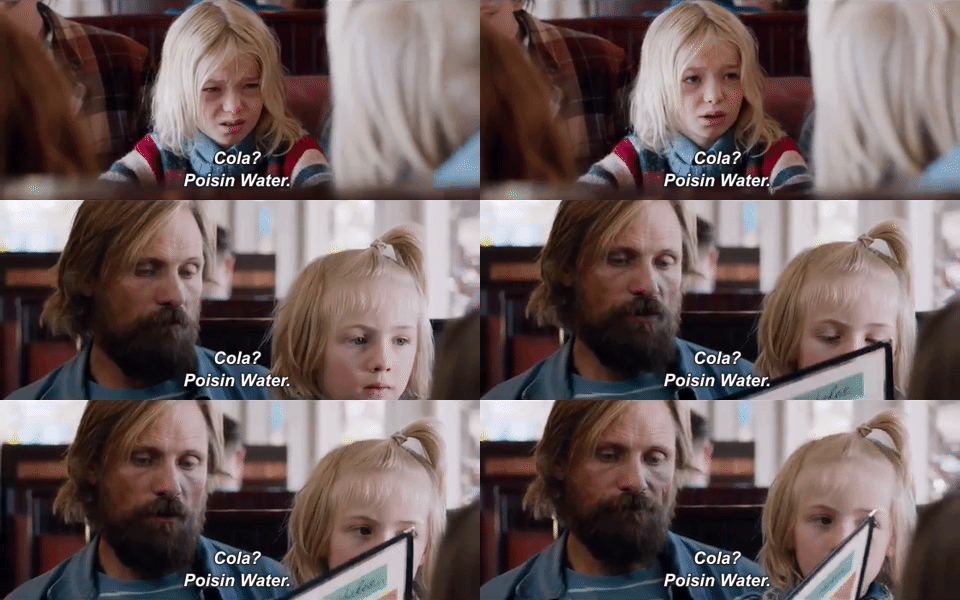


While WB aims to shock and slightly disgust, this is shows rather explicitly through the scene in which the main character is forced to sever a limb of a man who potentially may be her father; In contrast to this Captain Fantastic aims to invoke your interest and force you to question the way you think, it does this also through the presentation of its main character and how he chooses to raise his fam9ily by unconventional means that in today's society are regarded as 'abuse' yet his children seem much more capable than others in their age bracket, it opens up questions on what lessons are actually best to pass onto children and which lessons children should be allowed to learn themselves.  This is perhaps done to challenge the social construct that being in a school environment is the best and only way to learn as shown in the scene in which the main character's seven year old daughter is pitted against her older cousin in a challenge of intelligence, both are asked the same question (what is the American Bill of Rights) and while the cousin, who is meant to represent the average american child, is unable to answer the daughter is able to eloquently answer to the degree of someone who'd studied law.

Both films also examine the importance of parental presence, as WB's present one parental figure as psychologically absent and the other as potentially dead criminal it is imminently clear that within their family the teenage main character (Ree Dolly) is the parental figure, taking on the responsibilities of looking after her two younger siblings and their home. This is done like Captain Fantastic in a way that reflects our current society and allows audiences to question their presence in their homes within their on families and how it is affected by their absence of lack thereof. WB explains that familial ties have the ability to hold you back as much as they have the ability to propel you forward, depending on how close your family is. During the film the main character goes on a journey and asks anyone regarded as family for help yet they choose to turn against her in a bid to save themselves, showing there is more to family than blood as it depends on what you can actually do for your family.
Spike Lee's Do the Right Thing compared to Chi-Raq and The Best Man

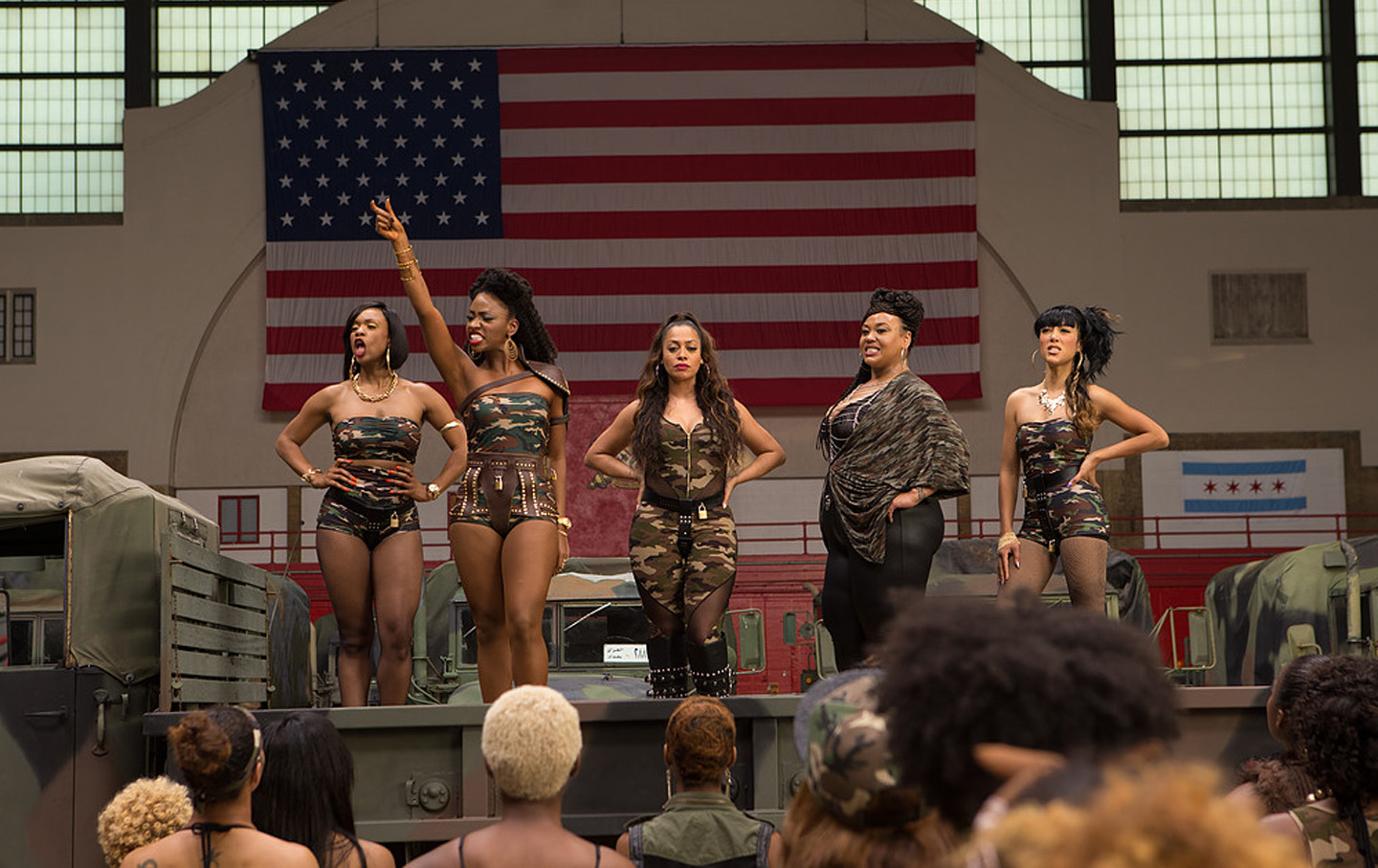
'Do the Right Thing' and Chi-Raq' are both films made by director Spike Lee, both contain similar themes of race and poverty but their messages are quite different as while DTRT has a strong focus on racism and class; CR places it's importance on an attempt at feminism but fails to understand the true meaning of it, taking on a more generic stereotyped approach rather than DTRT which takes the stereotypes and shows how we incorporate them ourselves in our own lives.


As a film CR is not entirely without fault as visually it is stunning, similar to DTRT which can be exceptionally brightly coloured at many times throughout it's run, as well. Yet CR has a much lighter tone despite the dark situation behind the comedy in which the crime rate in Chicago has reached levels where it is comically referred to as 'Chi-Raq' a conjunction of the state of Chicago and the country of Iraq - a war torn country in the middle east. The title itself dictates the situation

Thursday, 30 November 2017

Three main characters of No Country For Old Men

Sherrif -

            This is the character of Sheriff Ed Tom Bell played by Tommy Lee Jones. His character serves as the heart of No Country for old men, he portrays the typical western Sheriff with an implied compassionate nature and a respect for tradition and values. As a Sheriff he holds the law as a great importance, placing him into the default 'good guy' character archetype. This is expressed in the opening narration to the film 'I was sheriff of this county when I was twenty-five years old. Hard to believe. My grandfather was a lawman; father too.' Here Sheriff Bell provides slight context for his character, suggesting himself to be a very adept at his job due to receiving the position at a young age which suggests he's grown competent with age, something that is reflected on at the end of the play when he discusses his dreams which both revolve his father, implying he became a Sheriff due to his father's influence and is perhaps unsatisfied with the life he has lived as he hasn't had the chance to focus on his own personal aims instead of doing what was expected of him.
 He is seen wanting and trying to help the characters in the play but unlike a normal Western where he would have succeeded, in the Neo-Western he appears to fail at every attempt; to protect Llewellyn Moss, to help Carla Jean and to capture Chigurh. His troubles grow in the film until he reaches the point where despite representing the law there are certain situations beyond it. This is time lined in the form of him jumping from saving a cat from a tree to a full blown investigation into Chigurh, which despite his best efforts is unable to catch up with. This is further referenced by his name 'Bell' which suggests when 'rung'/called he cannot help but do something about it as it is not only in his job description but in his nature as the character fully embodies what it means to be a Sheriff. Yet despite all this he isn't portrayed as a threat if Chigurh had seen him as one he would have taken him out or at least attempted to) which suggests that in certain situations such as this one, evil is able to overcome good but unlike neutral which can pick and choose relevant points from both both evil and good are restricted by their alignment.

Cowboy -

This is represented by the character of Llewellyn Moss who is intended to follow the traditional hero narrative but destroys it by stealing money from drug dealers changing the course of his otherwise implied mundane life and setting in motion the events of the film. Yet unlike the majority of western hero's Llewellyn fails and his failure transcends to the people within his life and others affected by his actions. Despite this the character is presented as a good man, showing that he is the sole provider for his wife and himself as well as being a war veteran, his sniper past allows the audience to at least fantasise that he stands a chance against Chigurh but unfortunately due to his greed he ironically doesn't even get to enjoy the funds he illegally procured and ends up abandoning hiss wife in order to save said funds. The death of this character is brushed over quickly in the film, not depicting his death but revealing it in the scene after without showing the audience creating an anti-climax effect and a sense of frustration. This is potentially done to show that in death everything and everyone is rendered meaningless, characters are killed off throughout the film but audiences tend to feel emotional disconnect from this as we are not informed of background characters names, or personal details before their deaths so it is a struggle to empathise with them; by killing Llewellyn in this way it renders him in the same position as everyone who'd died before in the film which allows the audience to see it from Chigurh's POV similarly as he views deaths as just another body because on a basic level, that's all it is.

Hired Gun -

   Lastly Anton Chigurh represents all that is evil in No Country for Old Men, his very name sounding dark and foreign, unlike the other characters who mesh well with the surroundings. Chigurh exudes his evil through his shadow-like manner of dress, stoic gaze and chilling voice he is akin to a missionary of death. He has a set of rules he follows, it is not made clear the origin of these rules but when he breaks them he is shown to lose some of his supernatural aura and appear somewhat human. "There's no power in the coin, it's just you."

Wednesday, 18 October 2017

Casablanca Last Scene Analysis

Rebecca Nlewedim
Casablanca Last Scene Analysis


The last scene of Casablanca features the characters saying their final goodbyes in a renowned scene and imperatively key scene to the plot. It uses film form to display the cinematography, meaning and response, various context and auteur with stylistic features which is who is responsible for the film. There are also very prominent elements of classical Hollywood style.

The characters of Casablanca all represent different levels of alignment as that is a key theme throughout the film, what side are you on, seems to be a constant question within the narrative. Characters talk in 'double talk' and a type of code which clearly displays to the audience the lack of trust that is valued and portrayed by the characters in Casablanca; This is shown not only in the performance but throughout the film form as in context people are talking in code as this is a movie made during WW2, a sort of romantic war drama genre film, so people are commonly discussing senscamera,matters with innuendos and various telling nuances.


"It's the same old story/ a fight for love and glory..."

In terms cinematography the lighting is black and white so that already gives the foundation to make the film shadier and darker and the film excellently uses shadows to display the cracks and flaws in the characters as well as clue the audience in on how they're feeling.during the scene. Shadows are a great device to use as they can be so easily created in Casablanca with lamps and placement of characters within a scene which can quickly reference to the audience that everyone has a shadow so it creates an immediate connection to the characters and the objects surrounding them. The majority of Casablanca's lighting is artificial and it allows the shadows to exist by allowing them to deflect off them and express deceit and conflict.


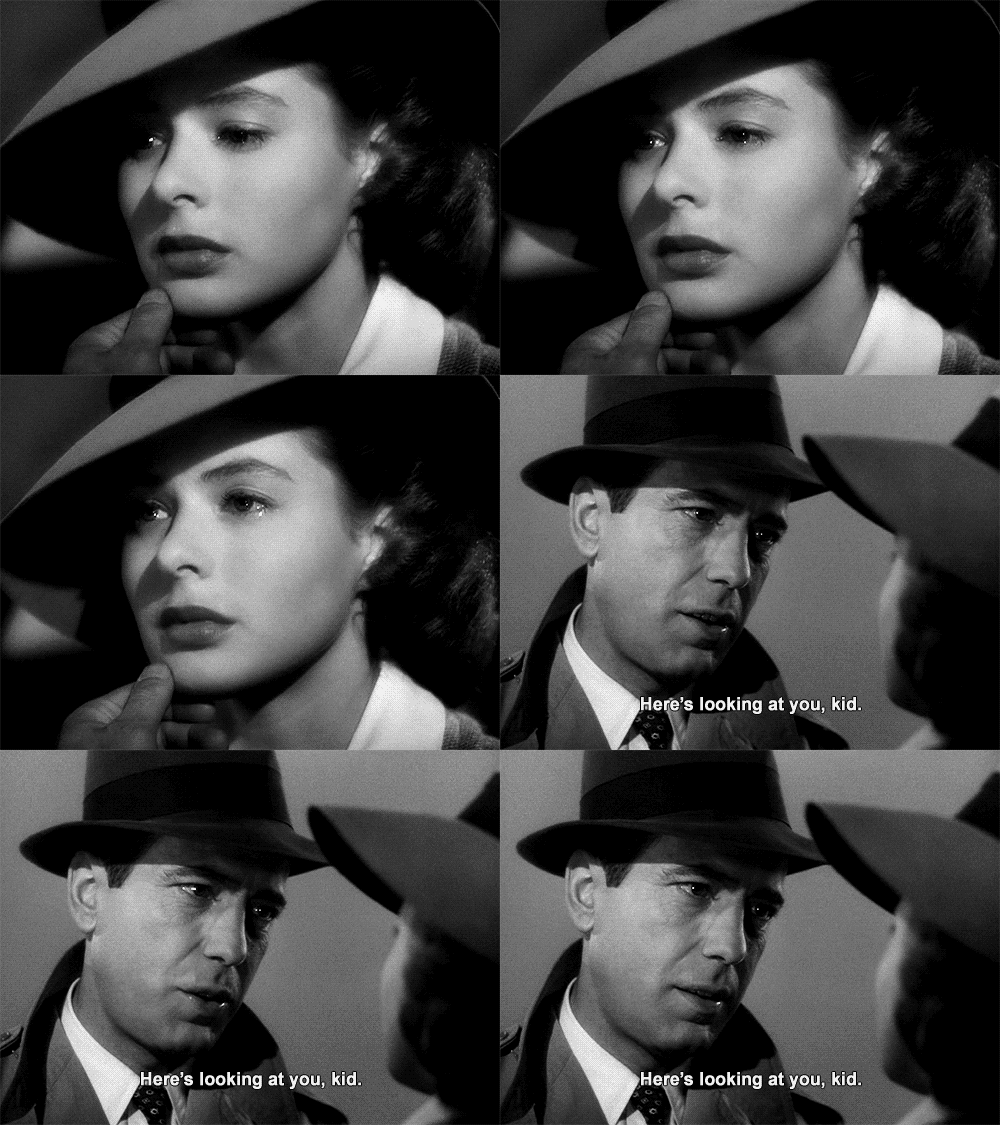
While the lighting is used to light a scene or draw attention to a character, it can also be used to highlight the alignment of a character whether good or bad (reference photo above).  It also affects mood as it follows the traditional notion that happy joyous moments should be brightly lit and sad, upsetting ones should be dimmed or dark. Like for example the last scene which is awkwardly lit to represent the awkward goodbye that is shown on screen, the weather is very misty/foggy which perfectly reflects the air of mystery and the secluded nature of their surroundings (trapped in Casablanca/airport) as they have no here left to run there is a focus on the action (Rick shooting Major Stresser) then leaving it with Ilsa (heroine) leaving with Victor Lasslo (would-be hero) while Rick and Louis go off to join the fight. This was very typical of Old Hollywood in terms of using lighting to convey emotion but Old Hollywood films with Film Noir elements rarely end as happily as Casablanca. However it's ending could be interpreted as unfair by the audience as in modern cinema Rick would have ended up with Ilsa.


  1. In terms of camera it zooms in on important character moments which was rare for a camera of that time to be able to do as it able to relatively track Major Stresser as he drives into the scene. It moves along to follow the story and highlight key points: rejection of the Vichy waster by Louis as he throws it in the water and the focus of the camera on that is a reference to him changing sides of alignment and choosing to fight for his country, a very patriotic moment. It also features a close up on Ingrid Bergman (Ilsa) who manages to deliver a beautifully emotive face with each shot which heightens the emotions of the scene. The lack of close up in the shooting scene allows an atmosphere of shock to settle in then be taken way as the Major shoots and miss allowing Rick to shoot and not only save his own life and the other characters but show the audience his readiness to defend his life. This could be interpreted as Boggart Film Noir background settling into the character and expressing his Old Hollywood background through that as Ingrid does with her beautiful heroine background.


(In A Lonely Place-1950- Film Noir: Humphrey Bogart & Gloria Grahame)

Classical Hollywood is considered to have occurred in circa 1930 - 1960 it is the idea of the origins of the Hollywood we know today and the familiar style used in cinematography within modern cinema; it shares context and influences with Casablanca but while Casablanca posses more links with modern cinema and individualistic techniques. Classical Hollywood focuses mainly around Film Noir which could perhaps be summed  up cigarettes, shadows, Bogart (main male lead in Casablanca, famous Film Noir Gangsta actor before hand), fate, guns, back and shady streets; Evidently it shows Casablanca uses a lot of these themes but is not a Film Noir film as although both are restricted historically in terms of  context to Black and White film, as colours
 had not been developed: Film Noir simply is much darker although some my argue that Casablanca has a not necessarily light-hearted ending.

Casablanca is an excellent example of film as it wasn't meant to be a blockbuster film that year but due to the machine that was the studio system allowed a good film to break through the cracks of this well oiled process; with use of carefully placed props and instructed directing that turned it into the masterpiece it is today without that even having to be the intended purpose making clear example of brilliant film.


Thursday, 12 October 2017

Soft vs Wasp

WASP


SOFT


Soft and Wasp are two British short films, each famous in their own right with their particular micro-features, camera angles and themes. While both films have family related context they carry different genres and other connotations; Soft having more of a drama genre and Wasp being more or a sort of romantic indie drama mix, both involving what could be thought of as adult themes in Soft (violence/abuse, class issues) and Wasp, (love/lust, child neglect, class issues) .

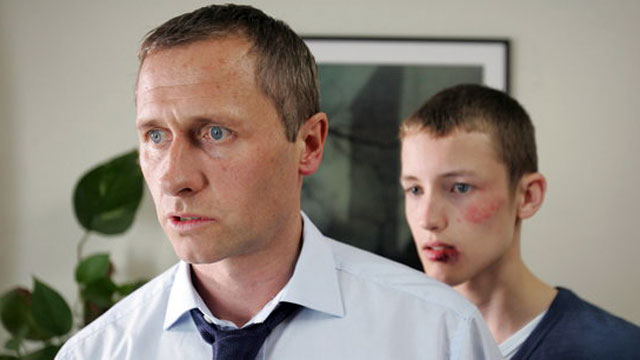
Soft for example uses the male stereotype that they're not allowed to be feminine and they're refusing to admit their fear as a weakness instead of the expected action it's usually displayed s within film, this allows his son to take on the mantle of man of the house as he figuratively steps up and defends his home after repeatedly asking his father if he was scared; a clear sign of him not only mocking him but showing the audience he's already recognised his fathers fear and will overcome it. It's as if it shows the typical transition of boy to man without even having o detail it in the script, simply by performance alone which is best acted by Micheal Socha (Misfits-E4) who plays the thug. He clearly displays how abuse can affect even those who appear to be the most well put together.

In contrast to Wasp which details a struggling lower class family with a mother who clearly isn't coping but evidently does love her children, it brings up the social issue of having children too young and questions what it means to be a good mother. Her youth is stated but shown in her performance as she speaks to her children as if they were friends not the more disciplined maternal relationship that is socially thought of as acceptable. The mother seeks out a father figure and provider for her children as well as romance for herself but the film has a sort of karma aspect as she tries to hide her children from her date only for him to discover then in an embarrassing situation. However despite this and over dark aspects of the film, it has a relatively optimistic ending with the mother and her kids leaving with her date after he buys them chips; a previous desire stated by the children earlier on in the play which is meant to be a metaphor for him making their dreams come to true, further relating to the optimistic ending as this further highlights this theme t audiences, leaving the film on a nice note. 

Analysing their camera angles; Soft begins with a fight with what appears to be a low quality phone camera on a distorted angle, cluing the audience in that it is most likely another teenager they're currently using the POV of to view the scene. This use of mise en scene carries on and switches to a suburban road from a birds eye view POV on what appears to be a fairly normal English day, or at least his is what is portrayed to the audience, from the change in camera and mood it is a clear indicator that not only has the POV matured there has a been an increase in wealth as the camera quality has improved; suggesting a lower class/upper class divide. This is all followed by birds chirping in the background of the film without any being visible which creates an immediate feel of suspense. This suspenseful feel isn't resolved until the car alarm in the film starts ringing, turning the mood frightful and frantic as the characters struggle with their conclusion this is relayed back to the audience with this sound effect.

Wasp opens with a sort of shaky cam effect symbolising the mothers instability with her life and her family situation, this is also further exaggerated as the opening scene is a fight between two struggling families over what seems like  completely ridiculous argument is actually a fairly accurate representation of reality. They grey bleak lighting from when they enter their home shows that they're not truly happy in their environment. Grey is a brilliant colour too use as not full being black it doesn't represent darkness but just one of the bleaker stages of life.

Both films display family from different points but both are ultimately about the overall care of children, how we treat them and the affects parents share on their lives with their children's. It questions the basis on whether or not a good parent or the right parent is an achievable goal and ultimately both decide it's not as perfection is not attainable so they highlight the key flaws in human nature so we can recognise them within.